
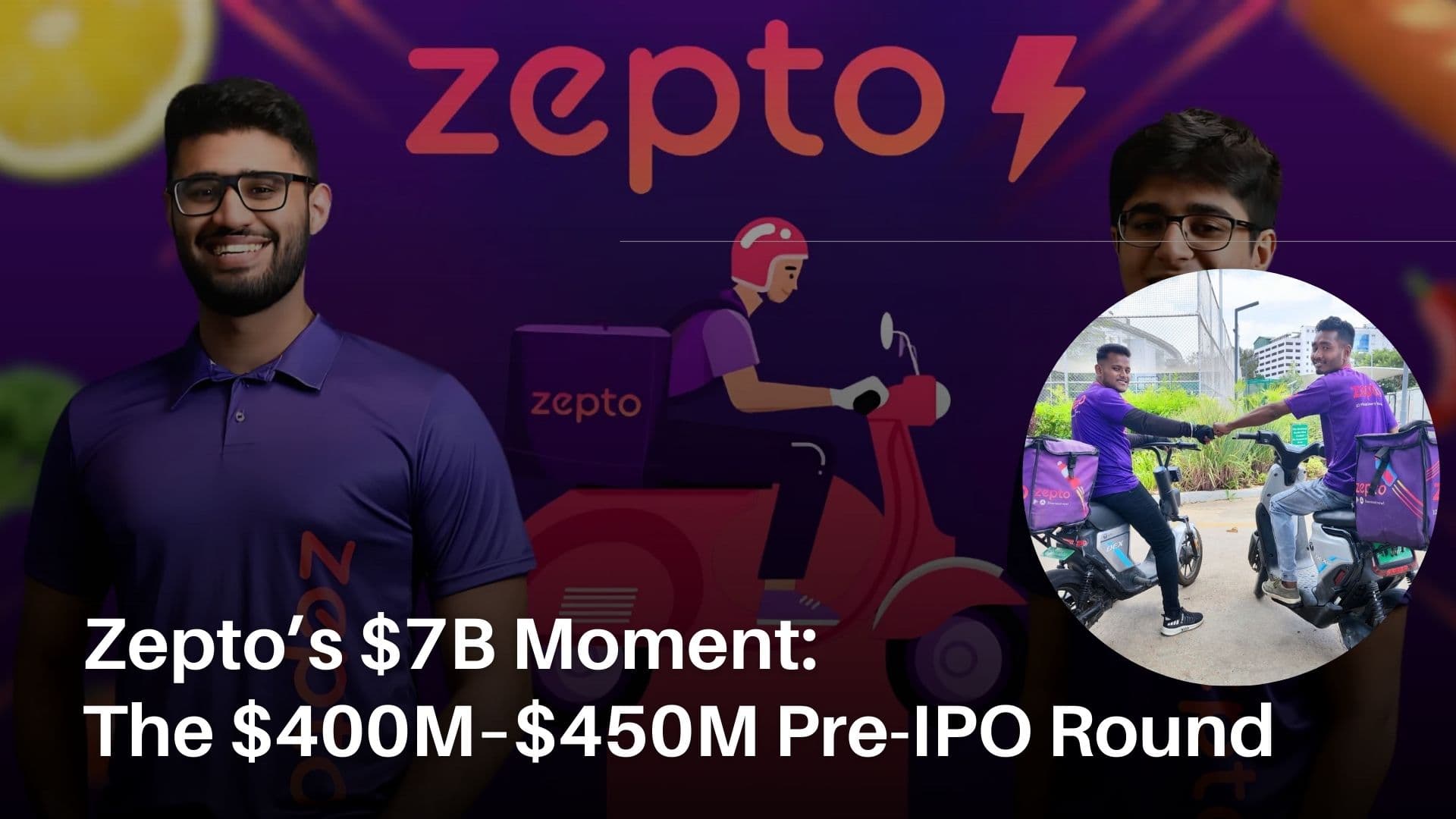
Zepto’s $7B Moment: The $400M–$450M Pre-IPO Round Fueling India’s Quick-Commerce Rocketship
Zepto’s latest round in the $400M to $450M range at a $7B valuation. Reuters specifically reported $450M raised at $7B, while TechCrunch reported $400M and described the round as a mix of primary and secondary capital.
If you live in an Indian metro, you’ve probably had that “how is this already here?” moment — groceries, snacks, chargers, even small electronics arriving in minutes. That behavior change is exactly what Zepto is monetizing, and investors are still paying up for the category.
Top reports put Zepto’s latest round in the $400M to $450M range at a $7B valuation. Reuters specifically reported $450M raised at $7B, while TechCrunch reported $400M and described the round as a mix of primary and secondary capital.
What’s the deal?
Zepto says the new capital values the company at about $7 billion, up from around $5B in its prior round (as reported).
The small mismatch you’ll see in headlines ($400M vs $450M) is typically because some outlets cite the “core” primary raise while others include secondary components and/or rounding; the consistent takeaway is that Zepto has closed a late-stage, IPO-track round at $7B.
A key line that stood out in Reuters’ reporting is Zepto’s cash position after the raise:
“We now have approximately $900M of net cash in bank…” — Aadit Palicha (CEO & co-founder).
In quick commerce, that cash buffer is strategic — it buys time to expand dark stores, improve unit economics, and withstand discount wars.
Who’s involved (and why it matters)
Reuters named the round’s investors as including CalPERS, General Catalyst, Goodwater Capital, and Lightspeed.
TechCrunch also listed participation from existing backers such as Avenir, Avra, Glade Brook, StepStone, and Nexus Venture Partners.
Why it matters: when a major pension fund like CalPERS appears in a late-stage round, it often signals “public market readiness” thinking — governance, durability, and a clearer IPO pathway.
Zepto by the numbers (the scale investors are paying for)
Here are the most repeated scale signals in major reporting:
- Approximately $900M net cash in bank after the raise (company statement cited by Reuters).
- 45,000+ products on the platform (including categories beyond grocery such as electronics and apparel, per Reuters).
- India’s quick-commerce market estimated around ₹640 billion in FY2025 and projected to triple by 2028 (CareEdge via Reuters).
The “real” story: unit economics, not delivery time
Quick commerce is marketed as a speed trick, but the business is really built on unit economics:
- Dark store productivity (orders per store per day)
- Picking efficiency (seconds saved in picking/packing = margin saved)
- Delivery density (shorter radius and more drops per rider-hour)
- Discount dependence (how much growth is “bought” vs earned through habit)
As companies move toward public markets, scrutiny sharpens around store-level profitability, payback periods, and whether growth can hold when incentives cool.
Zepto’s expansion play: beyond grocery into “minutes-everything”
Reuters notes Zepto is not just grocery: it also sells electronics and apparel.
This strategy can lift average order value, but it must be executed carefully — inventory complexity and returns can destroy margins if the operating system isn’t tight.
The extra engine: Zepto Cafe (quick food / QSR)
Zepto has been pushing food/snacks via Zepto Cafe. In a LinkedIn post, Aadit Palicha said Zepto Cafe hit 100,000 orders/day and described an approximately $100M annualized GMV run-rate with ~50% steady-state gross margin.
TechCrunch also highlighted Cafe as a meaningful growth lever (while noting operational challenges in scaling).
Translation: Cafe could become a second growth curve — but it’s also a second execution mountain (ops, staffing, sourcing, consistency).
The IPO road: “reverse flip” + filing prep
Zepto has been aligning for an India listing. Reporting has noted steps toward bringing the base to India and preparing for IPO processes, including the confidential filing route reported by Reuters.
The New Indian Express, quoting CFO Ramesh Bafna, framed the reverse flip as a “ghar wapasi” move and part of the capital-markets pathway.
A revealing founder excerpt (why raise now?)
Economic Times quoted Aadit Palicha indicating the round was closed before filing, implying a deliberate “strengthen the balance sheet first” approach ahead of public markets.
Competition is getting crowded (and extremely well-funded)
Reuters framed Zepto’s primary competitors as Blinkit (Eternal / formerly Zomato) and Swiggy’s Instamart.
TechCrunch noted the broader competitive pressure, including quick-delivery initiatives from large platforms.
This competitive reality is why the cash pile matters: in this category, leadership is built on network density and execution — and both require sustained investment.
New pressure point: regulators push back on the “10-minute” claim
On January 13, 2026, Reuters reported India’s labour ministry asked quick-commerce firms including Zepto to stop promoting deliveries as a “10-minute” service, amid safety and worker-pressure concerns.
This doesn’t erase demand for fast delivery, but it can reshape marketing language, rider incentive design, and compliance expectations across the sector.
What to watch next (the next 6–12 months)
- Dark-store expansion with better productivity
The big test isn’t only adding stores — it’s achieving higher throughput per store and faster payback periods as expansion continues. - Proof of profitability (store-level + company-level)
As IPO prep accelerates, investors will care less about “fastest” and more about contribution margin, repeat purchase strength, and reduced discount dependence. - The IPO filing and timing
Reuters’ reporting on confidential IPO filing signals active public-market planning; the next milestones will be clearer disclosures and timing cues. - Whether Zepto Cafe becomes a real second pillar
The numbers shared publicly are promising, but the key is scaling the experience consistently without operations eating the margin story.
Bottom line
Zepto’s $7B round is more than a flashy valuation headline. It’s a signal that investors still believe India’s quick commerce can be massive — and that Zepto is positioning itself as an IPO-ready contender with the cash to keep building while the category matures.