
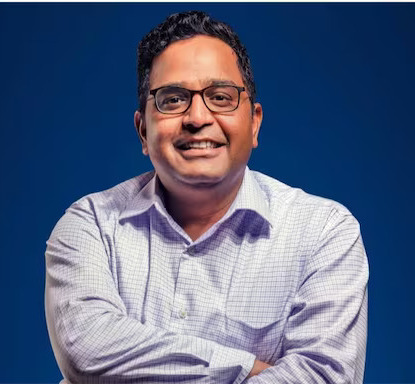

Vijay Shekhar Sharma
Vijay Shekhar Sharma: The Founder Who Bet on India Before India Was Ready
In the Indian startup ecosystem, few founders represent conviction, resilience, and scale-first thinking like Vijay Shekhar Sharma. His journey—from a small-town student to the founder of Paytm, one of India’s most influential fintech platforms—is not a fairytale. It’s a hard, sometimes uncomfortable, but deeply instructive founder story.
This is the kind of journey every serious entrepreneur should study.
Early Life: A Small-Town Mindset with Big-Ambition Thinking
Vijay Shekhar Sharma was born in Aligarh, Uttar Pradesh. He didn’t come from privilege, legacy networks, or elite startup circles. What he did have was clarity early on—technology would shape the future, and he wanted to be part of it.
He studied engineering at Delhi College of Engineering (now DTU), where he reportedly struggled with English initially—something he has openly spoken about. Instead of becoming a limitation, it became a fuel for self-belief and grit.
Founder takeaway: Your background doesn’t define your ceiling—your learning velocity does.
One97 to Paytm: Building Before the Market Exists
Before Paytm, Vijay founded One97 Communications, a company focused on mobile content and telecom services. This phase gave him two critical insights:
- India would become mobile-first
- Payments would eventually move online
In 2010, Paytm was launched as a mobile recharge platform. No hype. No “fintech buzzwords.” Just a simple product solving a daily pain point.
This wasn’t luck—it was pattern recognition.
Demonetisation: Prepared, Not Lucky
2016 demonetisation is often described as Paytm’s “lucky break.” That’s a lazy narrative.
The truth:
- Paytm already had tech infrastructure
- Merchant QR systems were deployable at speed
- The team could scale onboarding overnight
When the inflection point arrived, Vijay Shekhar Sharma didn’t panic—he executed.
Founder takeaway: Breakout moments reward preparation, not hope.
Founder Mindset: Obsession with Scale
What separates Vijay from many founders is his India-scale thinking. Paytm wasn’t built for early adopters—it was built for:
- Street vendors
- Tier 2 & Tier 3 cities
- First-time internet users
This required:
- Simple UX
- Local trust
- Heavy on-ground execution
It wasn’t glamorous. It was operationally brutal. But it worked.
IPO, Criticism, and Public Pressure
Paytm’s 2021 IPO made Vijay Shekhar Sharma one of the most publicly scrutinized founders in India. The stock struggled. Critics were loud. Narratives turned negative.
Most founders never experience this level of public failure pressure.
Vijay didn’t disappear. He acknowledged mistakes, recalibrated strategy, reduced cash burn, and doubled down on:
- Merchant monetisation
- Lending & financial services
- Long-term unit economics
Founder takeaway: Real leadership shows up after the applause fades.
Leadership Style: Founder, Not Influencer
Vijay Shekhar Sharma is not a “Twitter-founder” or a motivational content creator. His leadership style is:
- Product-focused
- Data-driven
- Long-term oriented
He’s opinionated, sometimes polarizing—but deeply mission-aligned with building financial infrastructure for India.
Why Vijay Shekhar Sharma Matters
Beyond Paytm’s valuation cycles, Vijay’s importance lies in this:
- He proved India can build fintech infrastructure, not just apps
- He normalized merchant-first digital payments
- He inspired a generation of founders from non-elite backgrounds
Paytm changed how India pays. Vijay changed what Indian founders believe is possible.
Lessons for Founders & Builders
If you’re building a startup, especially in India, Vijay Shekhar Sharma’s journey teaches you:
- Build before the market matures
- Scale is a strategy, not an outcome
- Regulation is part of the game in fintech
- Public failure doesn’t end private conviction
- Long games create real impact
Final Word
Vijay Shekhar Sharma’s story isn’t about overnight success. It’s about endurance.
In a startup ecosystem obsessed with speed, he represents something rarer:
The courage to stay in the game long enough for the future to arrive.
That’s not just a founder story.
That’s a blueprint.