
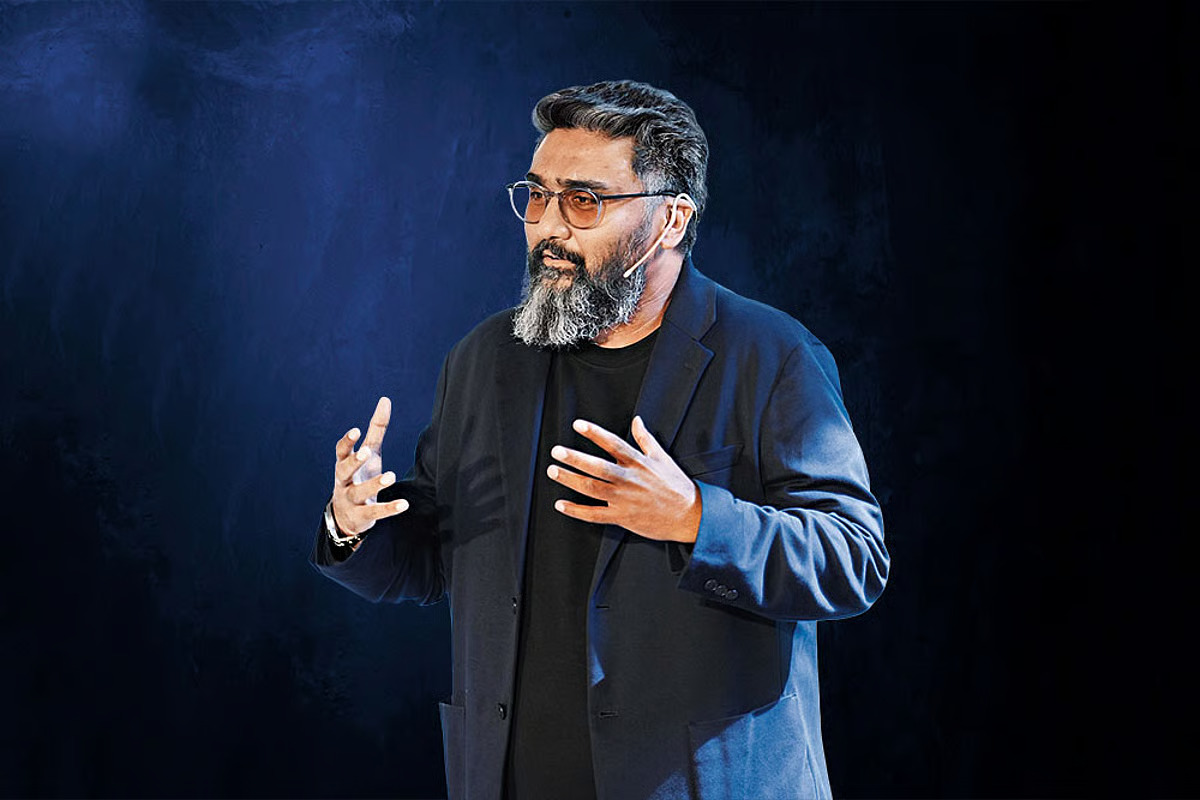

Kunal Shah
Origin: a philosophy student who obsessed over incentives
Kunal Shah (born 20 May 1983) is an Indian entrepreneur best known for co-founding FreeCharge and founding CRED.
Multiple profiles note he studied philosophy at Wilson College, Mumbai, and later enrolled in NMIMS for management studies but dropped out early—something he’s discussed as part of his unconventional path.
A long-form profile on FreeCharge’s early days describes him applying “behavior + rewards” thinking to everyday consumer actions—turning routine mobile recharges into a habit loop powered by couponing.
FreeCharge (2010): building distribution through a habit people already had
In August 2010, Shah co-founded FreeCharge with Sandeep Tandon.
The wedge was simple: users already recharged phones frequently, so FreeCharge paired recharges with rewards/coupons to pull users in and keep them coming back. Founding Fuel’s 2015 deep-dive describes this “talk time + couponing” insight as the early engine behind FreeCharge’s adoption.
Snapdeal exit (2015): the $400M deal that made him mainstream
In April 2015, Snapdeal acquired FreeCharge for about $400 million (often reported as ₹2,800 crore, in cash and stock).
The Times of India also reported the deal structure as a mix (commonly cited as cash + stock) and positioned it among the biggest consumer-internet deals of that era.
The “post-acquisition” reality: what happened to FreeCharge later
A few years later, Snapdeal sold FreeCharge to Axis Bank (widely reported around 2017). Inc42’s coverage of that period frames the sale as part of Snapdeal’s survival/reset phase and notes the reported sale value.
This chapter often gets cited in founder circles as a reminder that acquisitions don’t “freeze” momentum—products still need relentless iteration after the headline deal.
Why CRED (2018): turning trust and identity into a fintech product
In 2018, Shah founded CRED as a members-only credit-card bill payments and rewards platform—starting with a “high-trust” cohort rather than trying to serve everyone on day one.
That gating became part of the brand. CRED’s positioning has consistently been: pay on time, get premium experiences/rewards, and build a community around financial responsibility.
The CRED playbook: incentives + identity + distribution
Shah’s pattern across both companies is consistent: take a high-frequency behavior (recharges, bill payments), reduce friction, then attach rewards and status to make it sticky.
In a Forbes India interview title that became widely quoted, the framing is direct: “Entrepreneurship is not about glory, it is about judgement.”
The “750 credit score” moment: making the culture match the product
In 2025, Shah publicly said CRED hires only candidates with a 750+ credit score, arguing that teams building “responsible financial behaviour” should live it first.
A short excerpt reported by ET captures the intent: “…we have to live it first.”
Funding and valuation: from peak unicorn hype to a down round reset
CRED became one of India’s most talked-about fintech unicorns, raising from major global investors over time (DST, Tiger, Sequoia/Peak XV, sovereign funds, etc. are commonly reported in round coverage).
But the market corrected. The Economic Times reported that in June 2025, CRED raised about ₹617 crore (~$72M) at a $3.5B valuation, down from the $6.4B valuation associated with its 2022 fundraise.
What people often miss: CRED is a brand company built on fintech rails
A lot of people judge CRED like a basic payments utility. Shah’s bet is bigger: build a premium trust network first, then layer multiple financial products/experiences on top of that network over time.
That’s why CRED’s product feel, exclusivity, and “club” positioning aren’t cosmetic—those are distribution choices.
Future plans (directionally): elite membership, new credit products, startup access
A Times of India report said CRED is working on new credit products that avoid “co-brand lock-ins” and is exploring an invite-only membership that could eventually offer premium users access to early-stage startup investment opportunities.
This aligns with Shah’s consistent theme: use trust + curation to create a premium financial layer for a specific segment, not a mass-market “everything app.”
The takeaways: why founders study Kunal Shah
- He repeatedly picks a massive, high-frequency habit and builds distribution through it (recharge → bill payment).
- He treats incentives and identity as product mechanics, not just marketing.
- He’s lived both extremes—headline exits and valuation resets—so his public messaging increasingly emphasizes judgement over vanity.